
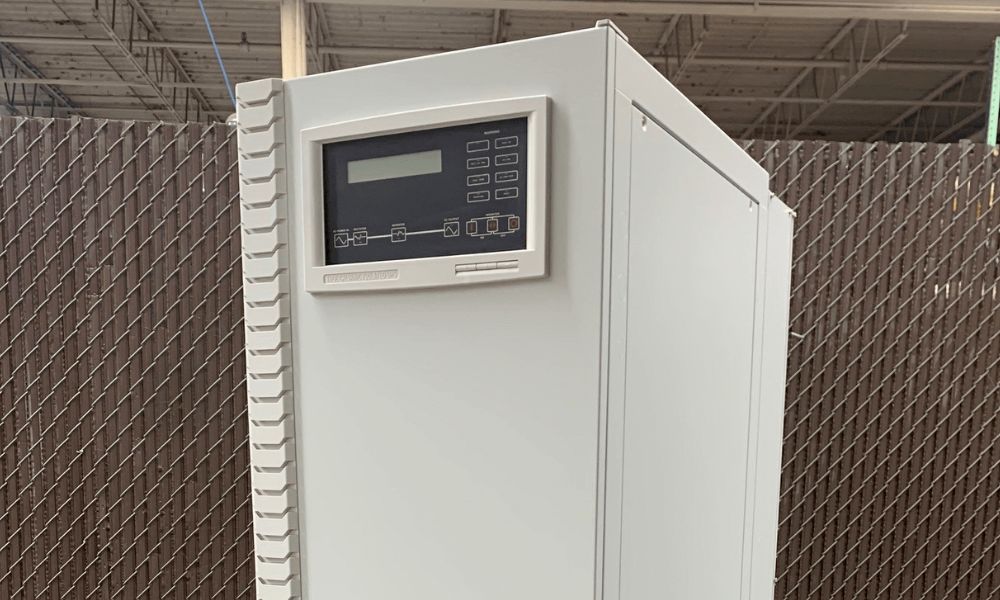
In the modern industrial and laboratory landscape, the demand for precise and adaptable power is higher than ever. As businesses expand globally, they often find that the equipment they purchase or the products they test require power specifications different from what their local utility provides. This is where the solid state frequency converters become an essential asset. Unlike traditional rotary converters that rely on moving parts and mechanical coupling, solid state units utilize advanced power electronics to convert frequency and voltage. Choosing the right unit is a critical decision that impacts equipment longevity, energy efficiency, and operational reliability. By focusing on key technical parameters and your facility’s unique needs, you can ensure a seamless integration of this vital technology.
Understanding the Solid State Advantage
A solid state frequency converter, also known as a static converter, uses semi-conductor components such as Insulated Gate Bipolar Transistors to transform input power into a controlled, high-quality output. The process involves rectifying the incoming alternating current into direct current and then using an inverter to reconstruct a new alternating current wave at the desired frequency and voltage. This digital approach allows for a level of precision and speed that mechanical systems simply cannot achieve.
The primary advantage of these units is their lack of moving parts, which results in nearly silent operation and significantly reduced maintenance requirements. They are also generally more compact and lighter than their rotary counterparts, making them ideal for facilities where floor space is at a premium. Furthermore, solid state technology offers an incredibly fast response time to load changes, ensuring that the output remains stable even when high-precision equipment is switched on or off.
Defining Your Load Requirements and Capacity
The most fundamental step in the selection process is accurately defining the load the converter will support. You must look beyond simple wattage and consider the total kilovolt-ampere (kVA) requirements of your machinery. It is essential to account for both the steady-state load and the peak demand. While solid state converters are highly efficient, they have specific limits regarding current surges. If your facility runs equipment with high inrush currents, such as large motors or compressors, you must ensure the converter has a sufficient overload rating to handle those initial spikes without tripping or suffering damage.
A common best practice is to size the converter with at least a twenty percent buffer above your maximum expected load. This headroom protects the internal power electronics from overheating during prolonged use and provides flexibility if you add more equipment to the circuit in the future. Overloading a static converter can lead to a shortened lifespan of the semi-conductor components, so being conservative with your capacity estimates is always the safer financial and operational path.
Evaluating Output Quality and Total Harmonic Distortion
For laboratories, medical facilities, and high-end electronics manufacturing, the purity of the power is just as important as the frequency itself. Poor quality power can lead to “noise” in sensitive measurements, data corruption, or premature failure of electronic components. When reviewing specifications, pay close attention to the Total Harmonic Distortion (THD). A high-quality solid state converter should offer a pure sine wave output with a THD of less than three percent.
Total harmonic distortion is a measurement of how much the output wave deviates from a perfect, smooth sine wave. Lower THD means “cleaner” power, which is vital for the proper functioning of sensitive microprocessors and imaging equipment. Additionally, check the voltage regulation specifications. A premium unit will maintain the output voltage within one percent of the set point, even if the input utility power fluctuates or the load on the converter changes rapidly.
Conclusion
Choosing the right solid state frequency converter is a strategic investment in the reliability and global compatibility of your facility. By carefully assessing your load capacity, demanding high-quality output with low harmonic distortion, and ensuring a proper environmental setup, you can provide your equipment with the stable power it requires to function at peak performance. While the technical specifications may seem daunting at first, focusing on these core pillars will lead you to a solution that offers silent, efficient, and long-lasting service. In a world where precision is paramount, the right frequency converter ensures that your facility is always ready to meet the challenges of the global market.
More Stories
The Next Frontier: How Advanced Technology is Redefining Human Potential
Revolutionary Pro Gadgets: The Future is Here
Tech Solutions That Will Revolutionize Your Daily Life